

Our strategy (2025-2030)
We are proud to share our new organisational strategy, shaped through deep listening, collaboration and a shared commitment to change. As you read through this report, you will see how Volunteering Matters will focus its efforts over the next five years to build stronger and more inclusive communities across the UK.
“
After nearly a year of deep listening, collaboration, testing and refining, we are proud to launch our new five year strategy. This is not just the unveiling of a document. It is the start of a new chapter in how we work together, how we lead change, and how we create the future we want to see – Amanda Naylor OBE, Chief Executive, Volunteering Matters
Rooted in real life
Our strategy is shaped by the voices of volunteers and communities across the UK. It focuses on five areas of change, each illustrated by the impact of real projects.

Combatting loneliness
We are committed to tackling loneliness by building stronger, more connected communities through the power of volunteering. By creating meaningful opportunities for people to connect, we help improve…

Breaking down barriers
We are committed to breaking down barriers so that everyone can take part in volunteering and community life. By removing obstacles and creating inclusive opportunities, we help ensure people feel…

Creating social cohesion
We are committed to creating social cohesion by bringing people together and strengthening relationships across communities. Through shared experiences and inclusive opportunities, we help build…

Improving health and wellbeing
We are committed to improving health and wellbeing by creating opportunities for people to feel connected, supported and active in their communities. Through volunteering, we help people build…

Equipping and enabling communities
We are committed to equipping and enabling communities with the skills, confidence and resources they need to lead change. By supporting local people to take action, we help build stronger, more…
Our work in action
These are just some of the ways our volunteers and communities are already making a difference. With this strategy, we will scale up our impact and ensure that volunteering is accessible to everyone, everywhere.
In North Lanarkshire, volunteer befrienders spend time with young carers, giving them a much-needed break from challenging home lives. In Forth Valley, older volunteers connect with children in schools, creating friendships that benefit both generations.
Through Sporting Chance in Stockton, men aged over 50 come together to get active, share experiences and support each other’s mental health. Our Action Earth projects in Scotland give people the chance to improve green spaces, boosting both biodiversity and wellbeing.
In Ipswich, young people are leading campaigns that challenge stereotypes and influence local decision-making. Through Match and Mentor in Norfolk, volunteers with additional needs are building skills, confidence and connection in their communities.
Our Family Mentors programme supports parents to take control of their future, building networks of support that help keep families together and thriving.
Projects like The Archie Project in Bristol bring school pupils and care home residents together, building understanding across generations and tackling stigma around dementia.
Introducing the volunteer ecosystem
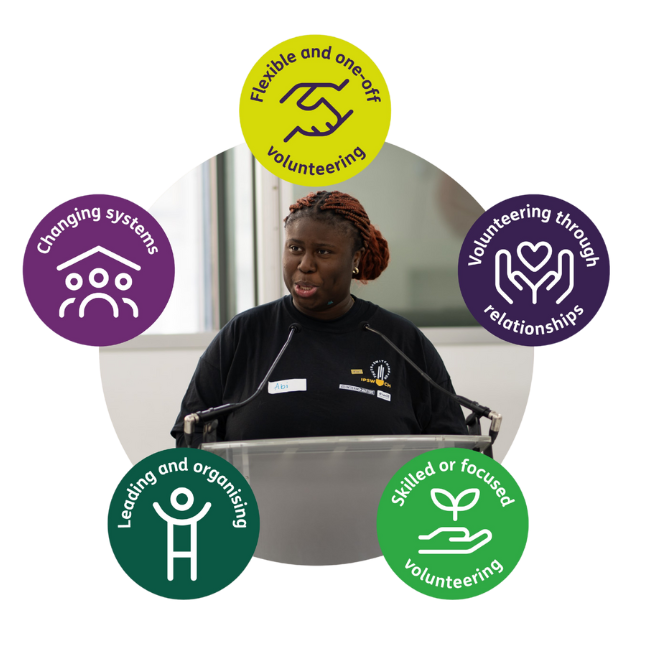
The volunteer ecosystem in the strategy recognises that people engage in volunteering in different ways, at different times in their lives. It outlines a flexible model with five key stages:
- Flexible and one-off volunteering: Entry-level opportunities that are easy to access and fit around people’s lives. These build confidence and connection.
- Volunteering through relationships: Regular, supportive roles built on human connection and trust. This stage often helps reduce isolation and creates lasting bonds.
- Skilled or focused volunteering: Roles that draw on lived or professional experience to offer targeted support. These have clear goals and often involve training.
- Leading and organising: Volunteers take on leadership roles, help shape projects and influence direction using their insight and experience.
- Changing systems: Long-term engagement where volunteers help influence policy, improve services and create structural change.
The ecosystem supports flexible movement between stages. People can pause, return or shift how they volunteer, with every contribution recognised as valuable.
Explore our strategy
This strategy reflects the voices of volunteers, staff, partners and communities. It responds to the challenges we face and holds a clear belief that volunteering is not just about giving time but about building connection, promoting equity and driving meaningful transformation.
Inside, you will find our five priority areas for change, our vision for an inclusive volunteer ecosystem and the ways we will strengthen our organisation to support this mission.
We hope you find inspiration in these pages. Whether you are a volunteer, colleague, partner or supporter, thank you for being part of this journey. Together, we will shape what comes next.
Resources
Downloads

Our Strategy (2025 – 2030)
Our new organisational strategy sets out our vision and priorities for the next five years. It reflects the voices of our communities, the power of volunteering and our commitment to lasting change.
Easy Read Strategy
An accessible version of our organisational strategy.
An Overview (One page summary)
This one-page summary outlines our organisational strategy for 2025 to 2030. It captures our shared vision, the changes we aim to make, and how we will work together to create stronger, more inclusive communities through the power of volunteering.